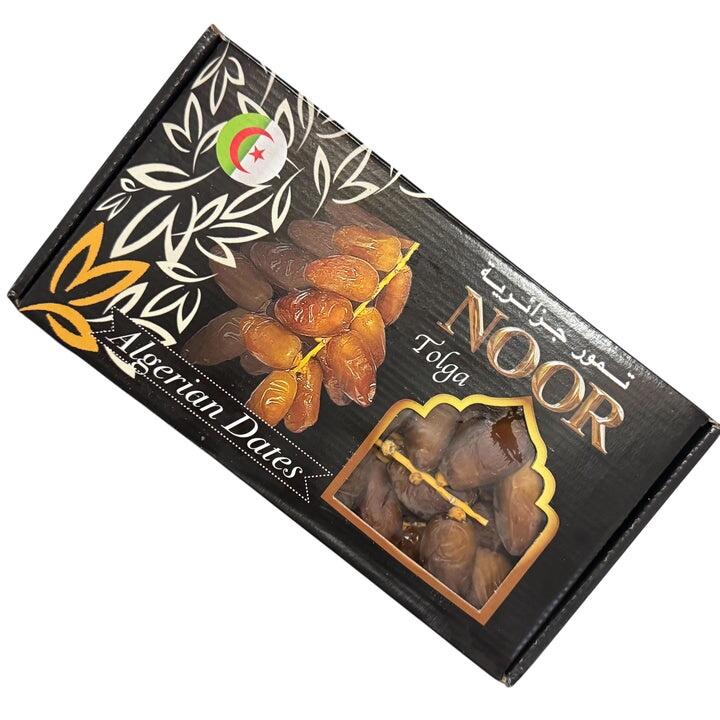
The Rich History of Moroccan Medjoul Dates
 The Rich History of Moroccan Medjoul Dates — And Their Connection to Medjool Dates in the USA
When you hold a Medjoul (also spelled Medjool or Mejhoul) date in your hand—soft, caramel-like, and luxuriously oversized—you’re holding a fruit with a history as rich as its flavor. Morocco, one of the world’s oldest producers of Medjoul dates, has played a key role in preserving and expanding this prized variety. Surprisingly, this history is also deeply connected to the Medjool dates now grown in the United States.
This is the story of how Moroccan Medjoul dates became a global treasure.
Origins: The “King of Dates” From Morocco
The Medjoul date is native to the Tafilalt region of southeastern Morocco, particularly around Erfoud, Rissani, and Merzouga. For centuries, Moroccan farmers cultivated this rare variety, valued for its:
-
Extra-large size
-
Soft, juicy texture
-
Natural sweetness
-
High mineral content
It became known as the “King of Dates.”
Medjoul palms were once extremely rare—so rare that by the early 1900s, the world feared the variety might disappear.
A Crisis: Disease Threatens the Medjoul Variety
In the late 1800s and early 1900s, date palms across North Africa, including Morocco, were struck by a serious disease known as Bayoud disease.
The Medjoul palm was particularly vulnerable.
By the 1920s, the Moroccan government and international botanists realized the Medjoul variety was at risk of extinction. They needed to save it—and this decision would shape the global date industry.
The Unexpected Journey to the USA
In 1927, American agricultural researchers requested a small number of disease-free Medjoul offshoots from Morocco to be tested and grown in a healthy environment.
Morocco agreed.
Only 11 Medjoul offshoots were transported from Morocco to the United States—carefully protected, disinfected, and monitored. They were planted in:
-
California (Coachella Valley)
-
Arizona
-
Later, Nevada
These 11 Moroccan offshoots survived… and thrived.
Today, every Medjool date grown in the USA is genetically descended from those original Moroccan palms.
In other words:
American Medjool dates exist because Morocco saved the variety.
Morocco Rebuilds Its Legacy
While the USA expanded commercial production, Morocco also invested heavily in rebuilding its own Medjoul palm groves—particularly from the 1980s onward.
Today Morocco produces some of the world’s best Medjoul dates, known for:
1. Flavor
Moroccan Medjoul dates tend to be richer, deeper in flavour, and more caramel-like due to the sandy desert soil and natural mineral content.
2. Texture
They often have a slightly firmer skin and moister interior, which many consider the ideal balance.
3. Natural Growing Conditions
Morocco’s palms are often grown in traditional oasis systems, with natural irrigation from underground aquifers.
4. Authentic Origin
Morocco is the birthplace of the Medjoul date.
Medjool vs. Medjoul: Why the Spellings Are Different
You’ll find different spellings:
-
Medjoul
-
Medjool
-
Mejhoul
-
Majhool
All refer to the same original Moroccan date. The differences exist due to:
-
French colonial spelling (“Medjoul”)
-
English transliteration (“Medjool”)
-
Arabic pronunciation (“Majhoul”)
Meaning: all Medjools today trace back to the same Moroccan origin.
Moroccan vs. American Medjool Dates Today
| Feature | Moroccan Medjoul | American Medjool |
|---|---|---|
| Origin | Native origin; original palms | Descendants of 11 Moroccan offshoots |
| Flavor | Deep caramel, rich, earthy | Mild, cleaner sweetness |
| Climate | Sahara desert oasis | Hot desert but controlled agriculture |
| Production Style | Mix of traditional + modern farms | Mostly large-scale industrial farms |
| Skin Texture | Slightly firmer, darker | Softer, lighter in color |
Both are high quality—but Moroccan Medjoul dates are the original genetic line and maintain the classic taste profile.
Why Moroccan Medjoul Dates Are Making a Worldwide Comeback
In the last decade, global demand for premium dates exploded. Morocco responded with:
-
Large new plantations in Errachidia & Draa-Tafilalet
-
Government-backed modernization
-
Quality control programs
-
International certifications
This is why you now see Moroccan Medjoul dates proudly labeled:
Product of Morocco – Premium Grade
Just like the “It’s A Date” packaging in your images—clean, premium branding that highlights the Moroccan heritage.
Conclusion: A Fruit With History, Culture, and Global Influence
From ancient Moroccan oases…
To a disease crisis…
To being rescued and spread to farms across the United States…
To once again becoming one of Morocco’s proudest exports…
The Medjoul date carries a remarkable story.
When you enjoy Moroccan Medjoul dates today, you’re tasting a fruit that shaped the date industry across continents. Rich, luxurious, and naturally sweet—this is more than a snack. It’s a piece of Moroccan history.